
Multifocal, Trifocal and EDOF Lenses

Author: Doç. Dr. Elif Ceren Yeşilkaya, Ophthalmologist, Cornea and Refractive Surgery
Published: · Last updated:
How monofocal, multifocal, trifocal, EDOF and toric lenses differ, how the right lens is chosen, and refractive lens exchange for eyes without cataract.
Quick Answer
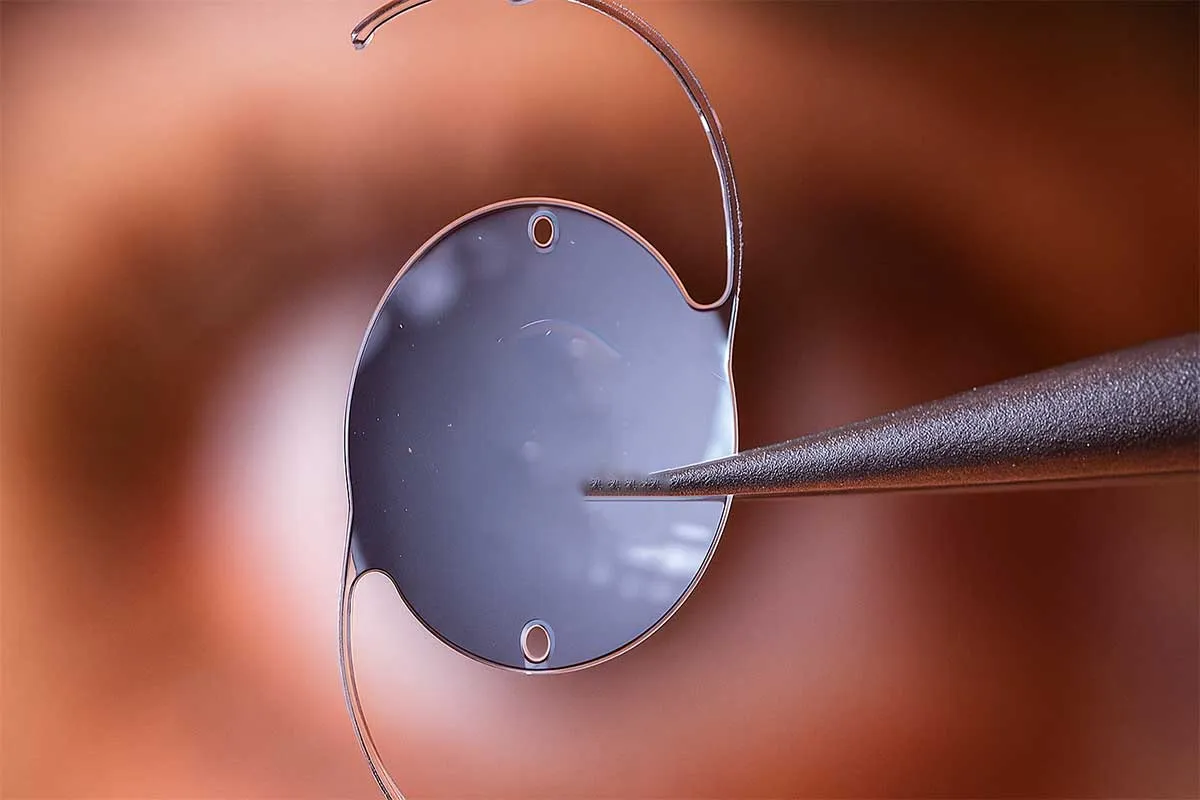
A smart lens is an intraocular lens that replaces the eye's natural lens during cataract surgery or refractive lens exchange and aims to give clear vision at more than one distance. Multifocal, trifocal and EDOF lenses all belong to this group.
What does smart lens mean?
The eye’s natural lens changes shape to shift focus between near and far. From the mid-40s this flexibility fades and reading glasses become necessary. Later in life the lens can cloud, which is a cataract. In lens surgery, the natural lens is removed and replaced with an artificial one.
Smart lens is the everyday name for multifocal, trifocal and EDOF lenses, which aim to give clear vision at more than one distance. The operation itself is the same as cataract surgery. What makes the difference is the optical design of the lens that goes in.
Two groups of people have this operation. The first is people with cataracts. The second is people without a cataract, usually over 45 and struggling with near vision, who want to depend less on glasses. For this second group the procedure is called refractive lens exchange.
Lens types and the distances they cover
Monofocal lens
A monofocal lens focuses at one distance, usually far. Distance vision is sharp and there are no noticeable halos around lights at night. You will need glasses for reading and often for the computer too. Some patients have one eye set for distance and the other for near (monovision). This can reduce the need for glasses, but not everyone gets used to it, so it is usually tried out with contact lenses first.
Multifocal (bifocal) lens
A multifocal lens splits light into two focal points, one for distance and one for near. It covers reading and distance vision, but intermediate distances such as a computer screen may not be sharp. Because incoming light is shared between two focal points, light scatter and glare at night are possible.
Trifocal lens
A trifocal lens adds a third focal point for intermediate distance on top of near and far. It suits people who need to see clearly at arm’s length, for example a computer, a tablet or a car dashboard. For most everyday tasks it greatly reduces the need for glasses. Reflections and glare can occur and usually fade over time.
EDOF (extended depth of focus) lens
An EDOF lens spreads focus along a continuous range from far to intermediate. Distance and intermediate vision feel more natural, and there are fewer halos and less glare than with multifocal and trifocal lenses. Near vision can be slightly weaker than with those lenses, so you may need reading glasses for small print.
Toric lens
A toric lens corrects astigmatism in the cornea. Monofocal, multifocal, trifocal and EDOF lenses all come in toric versions. A toric lens has to sit at the correct angle inside the eye. That angle is worked out from corneal measurements before surgery, and the lens is aligned to it during the operation.
What decides which lens is right for you?
Two sets of questions are weighed together. The first is about your daily life:
- Do you spend most of your day at a screen, reading, or driving?
- Do you often drive at night?
- Would wearing glasses for small print bother you?
The second is about the health of your eye. Conditions affecting the centre of the retina (the macula), advanced glaucoma, an irregular cornea or previous laser surgery can reduce the quality of vision a multifocal or trifocal lens can deliver. In these eyes, an EDOF or monofocal lens may be the better choice.
At Medicana Zincirlikuyu (Şişli, Istanbul), Assoc. Prof. Dr. Elif Ceren Yeşilkaya goes through your answers alongside your measurements and explains in advance which tasks might still need glasses with each lens.
Measurements before surgery
- Optical biometry: Measures the length of the eye and the curvature of the cornea, which are used to calculate the lens power. A small error here shows up as a leftover prescription after surgery.
- Corneal topography: Shows the amount and axis of astigmatism and how regular the cornea is. It decides whether a toric lens is needed.
- Macular OCT: A scan that images the centre of the retina in cross-section. It can pick up problems that are not visible during a standard examination.
- Tear film assessment: Dry eye distorts corneal measurements. If needed, the dryness is treated first and the measurements are repeated.
- Eye pressure and retinal examination: Glaucoma and retinal disease directly affect which lens is suitable.
If you wear contact lenses, you will be asked to stop for a while before the measurements so that the true shape of the cornea can be recorded.
No cataract? Refractive lens exchange
In an eye without a cataract, the clear natural lens can be removed in the same way and replaced with a multifocal or EDOF lens. This is usually offered to people over 45 who have started using reading glasses and also have a distance prescription. Because the natural lens has been removed, a cataract cannot develop in that eye later.
For younger people whose near vision has not yet declined, options that leave the natural lens alone, such as laser surgery or a phakic intraocular lens, are discussed first. In high short-sightedness, lens exchange can increase the risk of retinal detachment, so the edge of the retina is examined carefully beforehand.
The operation and aftercare
The natural lens is broken up with ultrasound and removed through a small incision (phacoemulsification), and the foldable artificial lens is inserted through the same opening. The two eyes are usually operated on on different days.
Straight after surgery you may notice stinging, blur, watering and reflections from lights; these ease as the eye heals. Adapting to the new lens takes time while the brain learns to interpret the images the lens provides, which is why halos around lights at night become less noticeable. How long this takes varies from person to person and is discussed at your examination.
Use the antibiotic and steroid drops as prescribed, do not rub your eye, keep your hands and face clean to lower the risk of infection, and attend every follow-up appointment.
Night lights, halos and other risks
- Halos and glare: More noticeable with multifocal and trifocal lenses, less so with EDOF. For most patients they fade over time.
- Reduced contrast: Picking out detail in dim light can be slightly harder than with a monofocal lens.
- Leftover prescription: If a small prescription remains, it can be fine-tuned with glasses or laser.
- Rotation of a toric lens: If the lens turns away from its axis, it is repositioned.
- Posterior capsule opacification: The thin membrane holding the lens can cloud months or years later. YAG laser treatment clears it.
- Infection, raised eye pressure, swelling of the macula and retinal detachment: Rare but serious complications.
If halos and glare still interfere with daily life after the adaptation period, exchanging the lens can be discussed. If you have sudden loss of vision, increasing pain or marked redness, seek medical attention straight away rather than waiting for your next appointment.
Bring your old glasses prescriptions to your consultation, along with records of any previous laser surgery. Measurements from before the laser treatment help calculate the lens power accurately.
{ AI · preliminary guidance }
onlineLet's talk about cataracts
AI responses do not replace a medical diagnosis.
Frequently Asked Questions
-
Will I be completely free of glasses?
With a trifocal lens, most everyday tasks can be done without glasses. With an EDOF lens, you may need reading glasses for small print. The health of the eye and any prescription left after surgery also affect the result, so which tasks might still need glasses is discussed at your consultation.
-
Should I choose a trifocal or an EDOF lens?
A trifocal lens suits people who read a lot and want to avoid reading glasses. An EDOF lens may suit people who drive often at night, are bothered by halos, or have an eye condition that rules out a multifocal design. The decision is based on your measurements and your daily habits together.
-
I have astigmatism. Can I still have a smart lens?
Yes. Multifocal, trifocal and EDOF lenses all come in toric versions that also correct astigmatism. The amount and axis of the astigmatism are measured from the cornea.
-
Does the lens wear out or need replacing?
An intraocular lens stays in the eye for life and needs no maintenance. If vision becomes hazy again years later, the usual cause is clouding of the thin membrane that holds the lens, which is cleared with YAG laser treatment.
-
I have had laser eye surgery before. Can I have a smart lens?
Yes, but because laser surgery changed the shape of the cornea, calculating the lens power is more complex. The regularity of the cornea also affects whether a multifocal or trifocal lens is suitable. If you have records from your laser surgery, bring them to your consultation.
-
Are both eyes operated on the same day?
The two eyes are usually operated on on different days. The second eye is scheduled once the first eye's healing has been checked.
-
Will I have trouble driving at night?
With multifocal and trifocal lenses, halos and glare around headlights can appear, especially early on, and for most patients they fade over time. If you drive a lot at night, mention it at your consultation, because it is taken into account when choosing the lens.
-
Who is refractive lens exchange for?
It is for people without a cataract, usually over 45, who have started needing reading glasses and also have a distance prescription. In younger people, options that leave the natural lens alone, such as laser surgery or a phakic intraocular lens, are considered first.
- Published
- Last updated
Appointment
Would you like more information?
A short form about Multifocal, Trifocal and EDOF Lenses. We reply during working hours.
Treatments often evaluated together
-
Cataract Surgery
How cataract surgery works: the measurements taken beforehand, phaco step by step, lens choice, aftercare and YAG laser for later haze.
-
Phakic Intraocular Lens (ICL)
How an ICL corrects vision in eyes unsuitable for laser because of a thin cornea or high prescription, the measurements it needs and how to look after your eye afterwards.
-
Laser Eye Surgery (PRK, LASIK, SMILE)
How PRK, No-Touch, LASIK and SMILE Pro differ, which corneal measurements decide whether you are a candidate, and how to look after your eyes afterwards.
The first step is an examination.
Your details reach Dr. Yeşilkaya's team, and we will get back to you during working hours.
+90 537 858 78 07