
Phakic Intraocular Lens (ICL)

Author: Doç. Dr. Elif Ceren Yeşilkaya, Ophthalmologist, Cornea and Refractive Surgery
Published: · Last updated:
How an ICL corrects vision in eyes unsuitable for laser because of a thin cornea or high prescription, the measurements it needs and how to look after your eye afterwards.
Quick Answer
A phakic intraocular lens (ICL) is a thin, soft lens placed behind the iris while the eye's natural lens stays in place. It corrects high short-sightedness, long-sightedness and astigmatism without removing corneal tissue, and it can be taken out if needed.
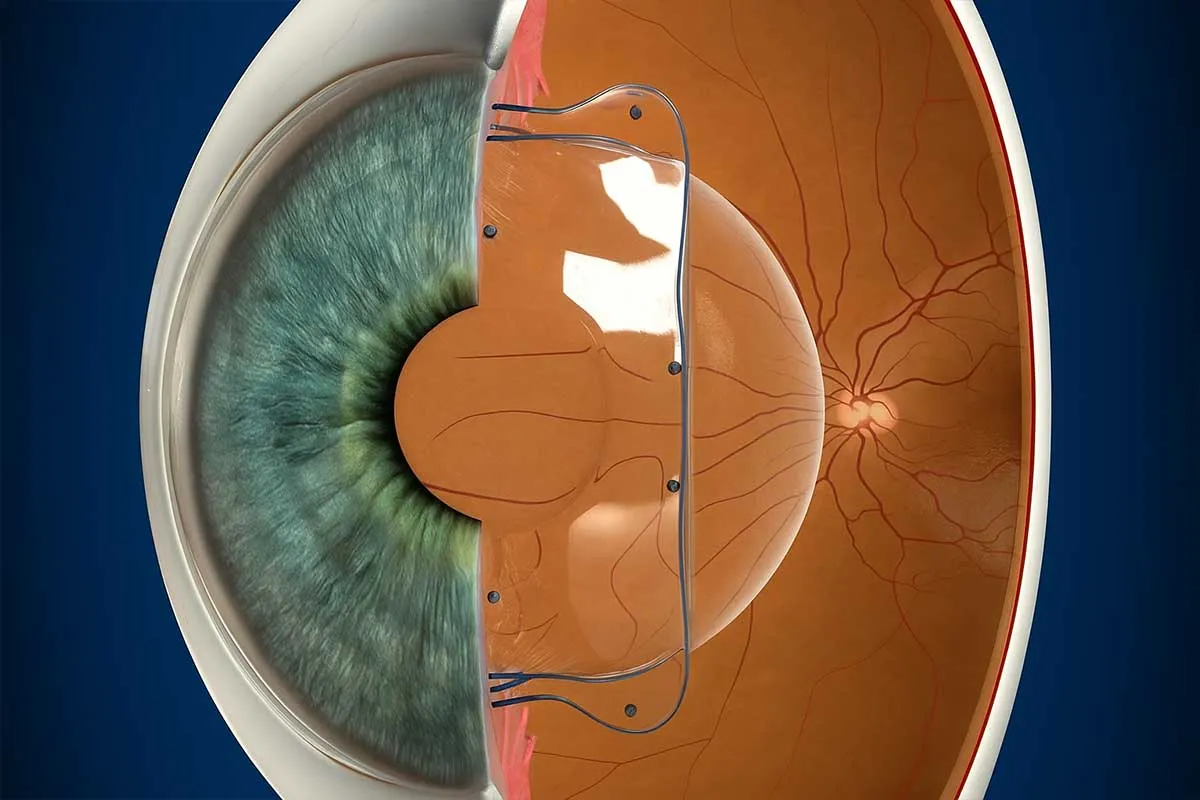
What is an ICL, and where does it sit in the eye?
An ICL (Implantable Collamer Lens) is a thin, soft lens placed inside the eye to correct your prescription. Collamer is the collagen-based material the lens is made from. Phakic means the eye keeps its own natural lens. Nothing is removed; the ICL is added in front of it.
The lens sits behind the iris, the coloured part of the eye, just in front of the natural lens. Because it is inside the eye, nobody can see it, you cannot feel it, and there is nothing to put in or take out each day. It can correct high short-sightedness, long-sightedness and astigmatism. For astigmatism, a toric version is used and aligned with the axis of the astigmatism.
An ICL gives a long-term correction that can be reversed. If needed, the lens can be removed or exchanged, and because no tissue is taken from the cornea, that route stays open.
Why an ICL comes up when laser is not suitable
Laser surgery corrects a prescription by removing tissue from the cornea. The higher the prescription, the more tissue has to be removed, and beyond a certain point the cornea cannot safely lose that much. If your cornea is naturally thin, that limit is reached at a lower prescription. An ICL removes no corneal tissue; the lens inside the eye does the correcting.
An ICL is most often discussed in these situations:
- A prescription too high for laser to correct safely
- A cornea too thin for laser
- Dry eye that laser surgery could make worse
Not everyone who is unsuitable for laser is suitable for an ICL. There has to be enough room inside the eye for the lens, and the measurements show whether there is. At Medicana Zincirlikuyu (Şişli, Istanbul), Assoc. Prof. Dr. Elif Ceren Yeşilkaya compares laser and ICL using the same set of measurements at your consultation.
Who is suitable for an ICL?
ICLs are usually offered to people aged 18 to 45 whose prescription has stopped changing. The main group is people who would like to stop relying on glasses or contact lenses but have been told laser is not suitable for them. After 45 the natural lens begins to lose its flexibility, so lens replacement may make more sense.
The suitability assessment includes:
- Anterior chamber depth: The space between the back of the cornea and the natural lens. It has to be deep enough for the lens to sit without harming the structures around it.
- Endothelial cell count: Endothelial cells line the inside of the cornea and keep it clear. They do not regenerate once lost, so the count is recorded before surgery and monitored over the years.
- Internal eye measurements: The lens size is chosen to match the internal diameter of the eye. A lens that is too large for the eye can raise eye pressure; one that is too small can sit too close to the natural lens.
- Corneal topography and cycloplegic refraction: These pin down the prescription and the axis of any astigmatism.
- Eye pressure and retinal examination: In high short-sightedness, the edge of the retina is checked carefully for thinning or tears.
The lens power and size are calculated separately for each eye from these measurements. Because the lens may need to be ordered to your measurements, there can be a gap between the assessment and the operation.
How is the operation done?
The pupil is widened with drops beforehand. The lens is folded and passed into the eye through an opening of about 3 mm, where it unfolds and is positioned behind the iris. The opening usually seals without stitches.
The two eyes are usually done on different days, so the first eye’s healing and eye pressure have been checked before the second is operated on. Your doctor sets the dates of your check-ups. At the first one, your eye pressure is measured and the position of the lens is assessed.
Looking after your eye after surgery
At first you may have blurred vision, a gritty feeling and sensitivity to light. These ease as the eye heals, and vision then sharpens gradually.
You will use antibiotic and steroid drops. Use them on time, and do not scratch or rub your eye. Ask at your follow-up when you can return to sport, swimming and eye make-up.
Risks and long-term follow-up
- Raised eye pressure: Most likely in the first days, and usually controlled with drops.
- Cataract: If the lens sits too close to the natural lens, the natural lens can cloud over the years.
- Endothelial cell loss: Because this can progress slowly, the cell count is measured at check-ups.
- Halos and glare: Rings may appear around lights at night.
- Further surgery: If the size or position of the lens is not right, it is repositioned or exchanged.
- Infection: Rare, but serious.
In high short-sightedness, the risk of retinal tears and detachment exists regardless of surgery. If a shadow or curtain moves across your vision, or you suddenly see many new floaters or flashes of light, seek help without delay. Sudden loss of vision, increasing pain, marked redness, or eye pain with headache and nausea also need urgent attention; the last can be a sign that eye pressure is rising quickly.
Check-ups are more frequent early on. After that, the distance between the ICL and the natural lens, your eye pressure and your endothelial cell count are checked at regular intervals that your doctor sets. If a cataract develops later in life, the ICL is removed and cataract surgery goes ahead in the usual way.
{ AI · preliminary guidance }
onlineLet's talk about life without glasses
AI responses do not replace a medical diagnosis.
Frequently Asked Questions
-
How is an ICL different from laser eye surgery?
Laser surgery corrects your prescription by removing tissue from the cornea. An ICL leaves the cornea untouched and adds a lens inside the eye, which can be removed if needed. Which one suits you depends on your corneal thickness, your prescription and the measurements taken inside the eye.
-
Can I feel the ICL, or can other people see it?
The lens sits inside the eye behind the iris, so you cannot feel it and it is not visible to others. Unlike a contact lens, it needs no daily care or cleaning.
-
Can an ICL be removed later?
Yes. If necessary, the lens can be removed or exchanged for a different one. Because no corneal tissue is removed, that option stays open.
-
Up to what age can an ICL be implanted?
It is usually offered to people aged 18 to 45 whose prescription has stopped changing. After 45 the natural lens starts to lose its flexibility, so lens replacement options are also discussed.
-
Does ICL surgery hurt?
You may feel slight pressure during the operation. Afterwards the eye may feel gritty and sensitive to light in the early days, and this eases as it heals.
-
Are both eyes done on the same day?
The two eyes are usually operated on on different days. The date for the second eye is planned after checking how the first eye is healing.
-
When can I get back to normal life?
It varies from person to person, so it is discussed in detail at your examination and the pre-operative consultation. Vision may be blurred and the eye gritty at first. The timing for sport and swimming is agreed at your follow-up.
-
What happens if I develop a cataract with an ICL in place?
During cataract surgery the ICL is removed, the natural lens is taken out and an artificial intraocular lens is implanted. That lens is chosen to correct your prescription at the time as well.
- Published
- Last updated
Appointment
Would you like more information?
A short form about Phakic Intraocular Lens (ICL). We reply during working hours.
Treatments often evaluated together
-
Laser Eye Surgery (PRK, LASIK, SMILE)
How PRK, No-Touch, LASIK and SMILE Pro differ, which corneal measurements decide whether you are a candidate, and how to look after your eyes afterwards.
-
Multifocal, Trifocal and EDOF Lenses
How monofocal, multifocal, trifocal, EDOF and toric lenses differ, how the right lens is chosen, and refractive lens exchange for eyes without cataract.
-
Contact Lens Fitting
Soft, toric, multifocal, rigid gas permeable and scleral lenses, lens options for keratoconus, lens hygiene and the warning signs of infection.
The first step is an examination.
Your details reach Dr. Yeşilkaya's team, and we will get back to you during working hours.
+90 537 858 78 07