
Laser Eye Surgery (PRK, LASIK, SMILE)
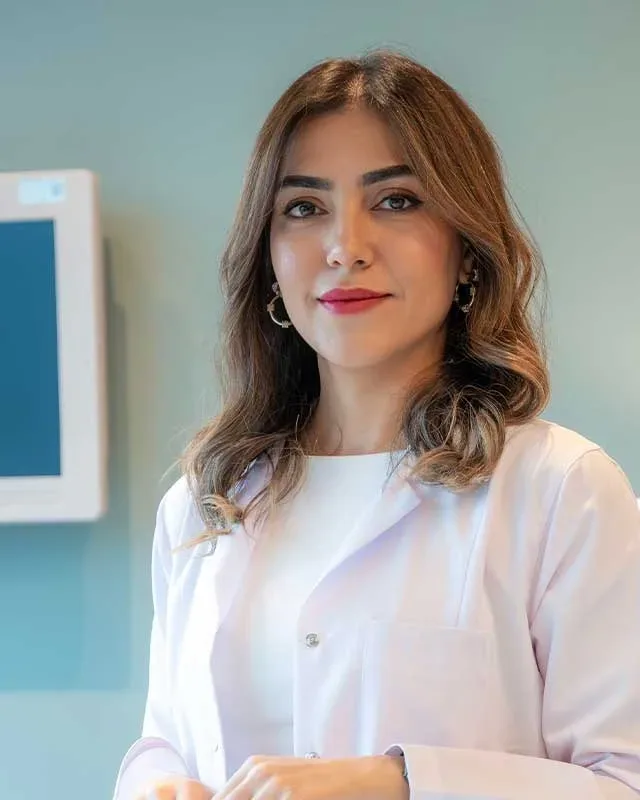
Author: Doç. Dr. Elif Ceren Yeşilkaya, Ophthalmologist, Cornea and Refractive Surgery
Published: · Last updated:
How PRK, No-Touch, LASIK and SMILE Pro differ, which corneal measurements decide whether you are a candidate, and how to look after your eyes afterwards.
Quick Answer
Laser eye surgery reshapes the cornea, the clear front surface of the eye, to correct short-sightedness, long-sightedness and astigmatism. The aim is to reduce or remove the need for glasses and contact lenses.
Which prescriptions can laser correct?
Laser treatment targets three refractive errors. In short-sightedness (myopia), light focuses in front of the retina and distant objects look blurred. In long-sightedness (hyperopia), the focus falls behind the retina and the eye has to work harder, especially for close-up tasks. In astigmatism, the cornea is not curved evenly in every direction, so images are distorted at all distances.
In each case the laser removes a few microns of corneal tissue to change the cornea’s curvature so that light focuses correctly on the retina.
The trouble with reading that begins in the mid-40s (presbyopia) comes from the natural lens inside the eye losing its flexibility. For people in this age group, lens-based options are discussed alongside laser.
Am I a candidate? The measurements taken at your assessment
There are two basic requirements: you must be 18 or older, and your prescription must have been stable for at least a year. The measurements decide the rest.
- Corneal topography and tomography: These map the curvature of the front and back surfaces of the cornea. If they show keratoconus (a condition in which the cornea thins and bulges forward over time), or a tendency towards it, laser is not performed, because removing tissue would weaken the cornea further.
- Corneal thickness (pachymetry): Because the laser removes tissue, enough thickness has to remain afterwards. The higher the prescription, the more tissue needs to be removed.
- Cycloplegic refraction: Drops that relax the eye’s focusing muscle reveal your true prescription. Without them, measurements in younger patients can overestimate short-sightedness.
- Tear tests: These measure how much tear fluid you produce and how quickly the tear film breaks up on the eye’s surface. Significant dry eye is treated first, as it distorts the measurements and makes post-operative symptoms worse.
- Pupil size, eye pressure and retinal examination: How wide the pupil opens in the dark helps plan for night vision. In high short-sightedness, the edge of the retina is checked carefully for thinning or tears.
Contact lenses temporarily change the shape of the cornea, so you will be asked to stop wearing them for a while before the measurements. How long depends on the type of lens. The dilating drops blur near vision for a few hours, so do not drive to your assessment.
Some findings delay laser treatment or point to a different procedure: a prescription that is still changing, pregnancy or breastfeeding, suspected keratoconus, a cornea too thin for laser, or a very high prescription. In the last two groups, a phakic lens (ICL), which is placed inside the eye without touching the cornea, is considered.
How PRK, No-Touch, LASIK and SMILE Pro differ
All four methods reshape the cornea. Where they differ is the depth at which the laser works and how much the surface is disturbed.
PRK
PRK is one of the oldest laser techniques. The epithelium, the thin outermost layer of the cornea, is removed and the laser is applied to the tissue directly beneath it. A protective contact lens is placed on the eye while the epithelium regrows. No cut or flap is made, so more of the cornea’s supporting tissue is preserved. For that reason PRK can suit thinner corneas and people whose sport or job carries a risk of a blow to the eye. The trade-off is more discomfort early on and slower visual recovery.
No-Touch (transepithelial PRK)
No-Touch is a variant of PRK. Instead of removing the epithelium with an instrument, the laser treats the epithelium and the tissue beneath it in a single step. Nothing touches the eye during the procedure, which is where the name comes from. As a surface treatment, its recovery is similar to PRK.
LASIK
A thin flap is created on the front of the cornea and folded back. The laser treats the tissue underneath, then the flap is laid back in place, where it adheres without stitches. Vision recovers faster than after PRK. Because a flap is made, the cornea must be thick enough to allow for it. Dry eye is common afterwards and usually settles gradually.
SMILE Pro
The laser creates a thin, lens-shaped disc of tissue (a lenticule) inside the cornea, which the surgeon removes through a 2–4 mm opening. There is no flap. The small incision cuts fewer corneal nerves, which may help keep dryness milder. SMILE Pro is the current version of the method, with a shorter laser application time. It is most often used for short-sightedness and short-sighted astigmatism; for long-sightedness, PRK or LASIK is usually discussed.
How is the right method chosen for you?
The measurements carry most of the decision: corneal thickness, the curvature pattern on topography, the type and size of your prescription, and the state of your tear film. Your job and hobbies matter too. For contact sports or work with a risk of eye injury, methods without a flap are often preferred. At Medicana Zincirlikuyu (Şişli, Istanbul), Assoc. Prof. Dr. Elif Ceren Yeşilkaya goes through these results with you and explains which method she recommends and why.
What happens on the day?
A small clip holds the eyelids open. You are asked to look at a fixed light. During PRK, No-Touch and LASIK, the laser tracks your eye movements and adjusts the treatment accordingly. While the LASIK flap is being made, and during the SMILE Pro laser step, the eye is held steady with gentle suction; you will feel brief pressure and your vision may blur. Both eyes are usually treated in the same session. Arrange for someone else to drive you afterwards.
Looking after your eyes after surgery
Whichever method you have, do not rub your eyes, use your drops as prescribed and wear sunglasses outdoors. Avoid eye make-up until your doctor says otherwise. Healing varies from person to person, so keep every follow-up appointment; your doctor sets their dates.
After PRK and No-Touch, pain, a gritty feeling and blurred vision are expected while the epithelium regrows. The protective contact lens is removed at a check-up, and vision then clears gradually. Slight blur, light sensitivity or halos around lights can persist for a while. After LASIK and SMILE Pro, mild dryness, light sensitivity or slight blur are possible early on. How long recovery takes in your case is discussed in detail at your examination.
Risks, and when to seek help straight away
- Dry eye: The most common side effect, usually easing over time.
- Halos and glare: Rings or starbursts around headlights and street lamps at night.
- Under- or over-correction: Part of the prescription may remain or return slightly over time; some patients need a further laser treatment.
- Corneal haze: Can occur after PRK and No-Touch.
- Flap problems: After LASIK, the flap can shift or inflammation can develop beneath it.
- Infection and ectasia: Ectasia is thinning and forward bulging of the cornea. Both are rare, and the topography and thickness measurements before surgery are there to screen out people at risk of ectasia.
Some pain in the first days after PRK is expected. If pain gets worse rather than better, your vision drops suddenly, or the eye becomes very red or starts to discharge, seek medical attention straight away rather than waiting for your next appointment.
Bring your old glasses prescriptions to the assessment. They show how long your prescription has been stable.
{ AI · preliminary guidance }
onlineLet's talk about life without glasses
AI responses do not replace a medical diagnosis.
Frequently Asked Questions
-
Does laser eye surgery hurt?
During the procedure most people feel touch and pressure. After PRK and No-Touch, the eye can be sore and gritty while the surface layer regrows, and you are given drops and pain relief for this. Discomfort after LASIK and SMILE Pro is usually milder.
-
Is there an age limit?
You need to be at least 18, and your prescription should have stayed the same for at least a year. There is no fixed upper limit, but from the mid-40s onwards near vision and the condition of the natural lens are also taken into account.
-
How soon can I go back to work?
It depends on the method and varies from person to person, so your return date is discussed in detail at your examination and the pre-operative consultation. After PRK and No-Touch, vision fluctuates while the surface heals, so screen work can be difficult; it is easier to plan time off until the protective lens is removed.
-
Can I have laser surgery if my cornea is thin?
It depends on the thickness and the prescription. PRK and No-Touch do not create a flap, so they preserve more of the cornea's supporting tissue and can suit some thinner corneas. If the cornea is not thick enough for laser, or the prescription is very high, a phakic intraocular lens (ICL) is considered.
-
I have dry eyes. Can I still have laser surgery?
Tear tests measure how dry the eye is first, and any dryness is treated before going ahead. Mild, well-controlled dry eye usually does not rule out laser surgery, though it can influence which method is chosen. With severe dry eye, other options are discussed.
-
Are both eyes treated on the same day?
With laser treatment, both eyes are usually treated in the same session. If there is a marked difference between the eyes or another specific concern, the plan can be changed at the consultation.
-
Will my prescription come back?
Tissue removed by the laser does not grow back, and for most patients the correction is permanent. Higher prescriptions can drift back slightly, and occasionally a further laser treatment is needed. The difficulty with near vision that starts in the 40s is a separate process and may require reading glasses.
- Published
- Last updated
Appointment
Would you like more information?
A short form about Laser Eye Surgery (PRK, LASIK, SMILE). We reply during working hours.
Treatments often evaluated together
-
Phakic Intraocular Lens (ICL)
How an ICL corrects vision in eyes unsuitable for laser because of a thin cornea or high prescription, the measurements it needs and how to look after your eye afterwards.
-
Keratoconus Treatment
Keratoconus usually starts in the teenage years. Topography follow-up, corneal cross-linking (CXL), rigid and scleral lenses, rings and transplant.
-
Dry Eye Treatment
Causes of dry eye, the tear tests done at examination, choosing artificial tears, lid hygiene, punctal plugs and dry eye checks before laser surgery.
The first step is an examination.
Your details reach Dr. Yeşilkaya's team, and we will get back to you during working hours.
+90 537 858 78 07