
Dry Eye Treatment

Author: Doç. Dr. Elif Ceren Yeşilkaya, Ophthalmologist, Cornea and Refractive Surgery
Published: · Last updated:
Causes of dry eye, the tear tests done at examination, choosing artificial tears, lid hygiene, punctal plugs and dry eye checks before laser surgery.
Quick Answer
Dry eye is a condition in which the tear film covering the front of the eye breaks up too quickly, either because too few tears are made or because they evaporate fast, causing burning, grittiness and fluctuating vision. Treatment depends on the cause and most patients use several approaches together.
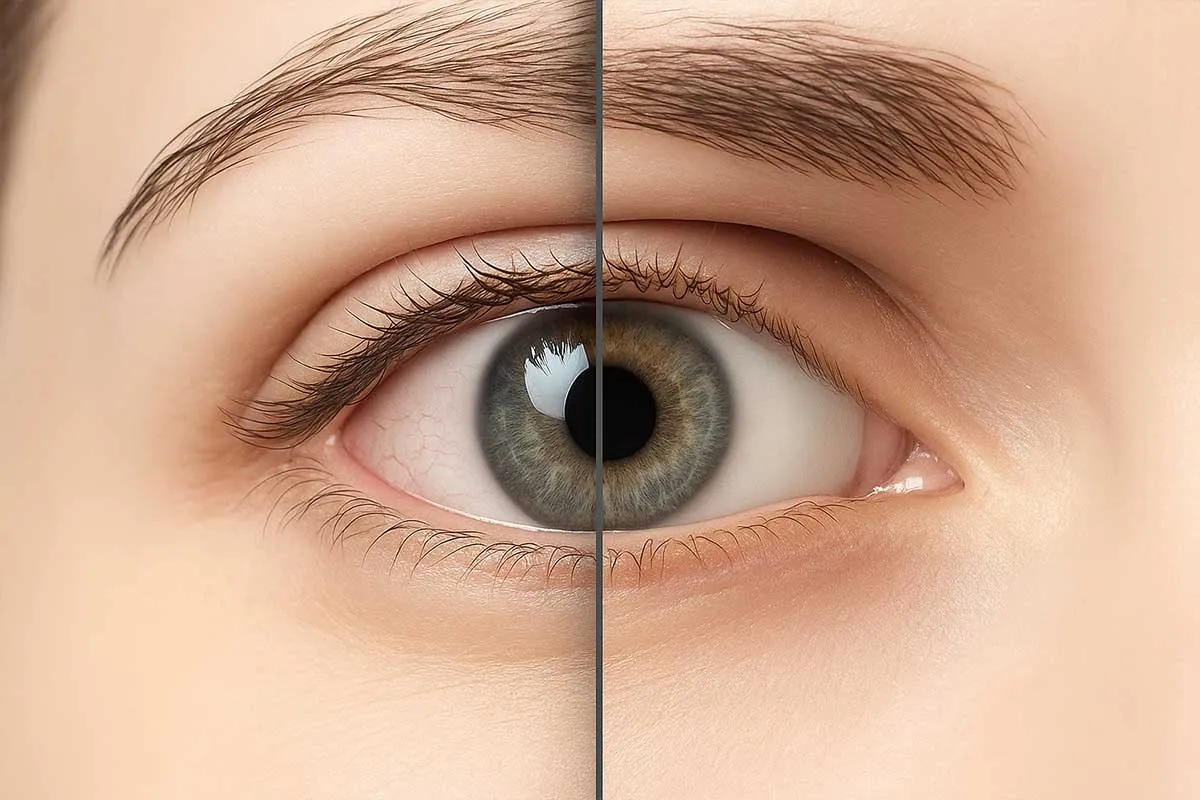
Each time you blink, a thin film of tears spreads across the front of the eye. Its innermost mucin layer helps the tears cling to the surface, the watery middle layer keeps the surface moist, and the outer oily layer slows evaporation. In dry eye one or more of these layers stops working properly. Some people produce too little watery tear fluid. More often, the oil glands along the eyelid margin release too little oil and the tears evaporate within seconds.
Symptoms vary from person to person: burning, stinging, a gritty feeling as if there is sand in the eye, redness, discomfort in bright light, and blurring that comes and goes while reading or looking at a screen. Blurring that clears when you blink suggests the tear film is breaking up quickly.
Who is more likely to get dry eye?
People who spend long hours at a screen, work in air-conditioned or dry rooms, or wear contact lenses are more prone to it. Tear production falls with age, and hormonal changes such as the menopause increase dryness in women. Underlying causes include rheumatic conditions such as Sjögren’s syndrome and rheumatoid arthritis, eyelids that do not close fully, and inflammation of the lid margin (blepharitis). Medications can reduce tears too, including antihistamines, some antidepressants and isotretinoin, which is used for acne. Temporary dryness is also common after laser and eyelid surgery.
Why do my eyes burn after screen work?
We normally blink 15–20 times a minute. When we focus on a screen this drops sharply, and many blinks are incomplete, with the lid reopening before it has fully closed. The tear film breaks up before it is renewed, so burning and tiredness build up by the end of the day.
A few habits reduce the strain:
- Every 20 minutes, look at something about 6 metres (20 feet) away for 20 seconds.
- Position the screen slightly below eye level. Looking down means the lids cover more of the eye.
- Keep air conditioning and car heater vents pointed away from your face, and use a humidifier in dry rooms.
- During long sessions, close your eyes fully and deliberately a few times.
What is meibomian gland dysfunction?
Along the upper and lower lid margins, just behind the lashes, sits a row of small oil glands called meibomian glands. With every blink they release a thin layer of oil over the tear film. When the gland openings become blocked or the oil thickens, this layer thins and the tears evaporate quickly. This is one of the most common causes of dry eye. Red lid margins, crusting at the base of the lashes and burning that is worse in the morning often go with it. Drops alone are not enough here; the blocked glands also need to be opened.
What tests are done at the examination?
The examination starts with questions about when your symptoms are worse, which medicines you take and how long you spend at screens. The lid margins, lashes and eye surface are then examined with a slit lamp, a microscope with a bright light.
- Tear break-up time: An orange dye called fluorescein is put into the eye. After a blink, the doctor times how many seconds pass before the first dry spot appears in the tear film. Under 10 seconds means the tears are breaking up too quickly.
- Schirmer test: A thin paper strip is placed on the lower lid. The length that becomes wet in five minutes shows how much watery tear fluid the eye produces.
- Surface staining: Fluorescein or lissamine green dye shows damage that dryness has caused to the cornea and the conjunctiva (the thin membrane covering the white of the eye).
- Meibomian gland assessment: Gentle pressure on the lid margin shows whether the gland secretion is clear oil or a thick, paste-like substance. If needed, the glands are imaged with infrared light (meibography).
These results show which layer of the tear film is failing, and treatment is chosen accordingly.
How is dry eye treated?
Most patients use more than one approach, and the plan is adjusted at follow-up visits.
Choosing artificial tears
Artificial tears temporarily replace missing tear fluid. Three things guide the choice:
- Preservatives: If you need drops more than four times a day, preservative-free single-dose vials or preservative-free multi-dose bottles are used. Preservatives can irritate the eye’s surface with frequent use.
- Thickness: Thin drops do not blur vision, so they suit daytime use. Gels and ointments keep the eye moist for longer but blur vision for a few minutes, so they are mostly used at bedtime.
- Ingredients: Drops containing lipids may suit patients with a weak oily layer, that is, those with meibomian gland problems.
Lid hygiene and warm compresses
A warm compress held on the closed lids for 5–10 minutes softens the thickened oil in the glands. This is followed by a gentle massage towards the lash line with a fingertip, then cleaning of the lid margin with a lid-cleansing solution or wipe. The compress should never be hot enough to burn the skin. The effect builds gradually with daily use, and symptoms often come back if the routine stops.
Anti-inflammatory drops
The longer dryness lasts, the more chronic inflammation develops on the eye’s surface, and that inflammation disrupts tear production further. Prescription drops such as ciclosporin or lifitegrast aim to break this cycle. They work gradually and can sting when you first start them.
Punctal plugs
The puncta are the tiny openings at the inner corner of the upper and lower lids, through which tears drain into the nose. A small silicone plug, or a collagen plug that dissolves over time, placed in this opening keeps tears on the eye for longer. Plugs help most when the eye produces too little watery tear fluid. A plug can fall out on its own, irritate the inner corner or cause watering, and it can be removed if needed. Any active inflammation of the lid margin is treated first, because a plug would also hold inflamed tears on the eye.
IPL and thermal pulsation
Intense pulsed light (IPL) can be used for meibomian gland dysfunction. The eyes are covered with protective shields and light pulses are applied to the skin of the lower lids and cheeks. The aim is to calm inflammation along the lid margin and help the glands release their oil, and treatment is planned as a series of sessions a few weeks apart. Thermal pulsation devices, which warm the lids from the inside while applying controlled pressure to the glands, are used for the same purpose.
Dry eye before and after laser eye surgery
If you are planning laser eye surgery, dry eye is treated first for two reasons. An irregular tear film distorts measurements such as corneal topography and can affect the calculated correction. Dryness that is present before surgery also tends to get worse afterwards.
In LASIK, some of the sensory nerves at the surface are cut when the thin corneal flap is created. These nerves trigger blinking and tear secretion, so dryness is common after surgery and usually settles gradually. SMILE uses a smaller incision, so fewer nerves are affected. At the laser assessment, tear tests are reviewed together with topography and corneal thickness, and if there is significant dryness, the measurements are repeated once it has been treated. Assoc. Prof. Dr. Elif Ceren Yeşilkaya decides which method is suitable based on these results.
When should you seek help straight away?
Dry eye symptoms usually develop slowly. Severe or worsening eye pain, sudden loss of vision, marked redness, being unable to tolerate light, or a pus-like discharge should not be put down to dryness. These can signal a corneal infection or another condition that needs urgent treatment. If you wear contact lenses, take them out and have your eyes examined the same day.
Dry eye assessments take place at the eye clinic of Medicana Zincirlikuyu (Şişli, Istanbul). Bring the boxes of any drops you use and a list of your regular medicines. You may be asked not to use drops for a few hours before the appointment so that the tests give accurate results; you will be told this when you book.
{ AI · preliminary guidance }
onlineLet's talk about your eye health
AI responses do not replace a medical diagnosis.
Frequently Asked Questions
-
My eyes water all the time. Can that still be dry eye?
Yes. When the dry surface of the eye becomes irritated, the tear gland responds with a flood of watery reflex tears. These tears lack the oily layer that holds them on the eye, so they run down the cheek instead. At the examination the doctor checks whether the watering comes from dryness or from a blocked tear duct.
-
How many times a day can I use artificial tears?
Preservative-free drops can be used as often as you need them. With preserved bottles, using them more than four times a day can irritate the eye's surface, so anyone needing drops more often is moved to a preservative-free product. If symptoms continue despite regular drops, the underlying cause is looked at again.
-
What does having a punctal plug fitted feel like?
The plug is placed in the examination chair. You may feel brief pressure during the procedure and a mild foreign-body sensation at the inner corner in the early days. If the plug causes discomfort or watering, it can be removed.
-
Does dry eye rule out laser eye surgery?
Mild dry eye that responds to treatment usually does not. The dryness is treated first and the corneal measurements are then repeated. In severe dry eye a different method may be chosen, or laser surgery may not be recommended. The decision is made from the examination results.
-
Is dryness common after laser eye surgery?
Yes. Mild dryness and light sensitivity are common afterwards, and preservative-free artificial tears are used while they settle. How long this takes varies from person to person and is discussed at your examination. Dryness that does not settle is treated separately.
-
Do omega-3 supplements help dry eye?
They may improve tear quality in some patients, although studies on this have produced mixed results. They are used alongside drops and lid care, not in place of them. If you take blood-thinning medication, check with your doctor before starting them.
-
Does dry eye go away completely?
It depends on the cause. Dryness linked to air conditioning, long screen hours or a medication can improve markedly once the trigger is reduced. Meibomian gland dysfunction and Sjögren's syndrome need ongoing care, and symptoms often return when lid hygiene stops.
-
Which drops can I use with contact lenses?
Use drops labelled as suitable for contact lens wear, ideally preservative-free. Gels and ointments are not used with lenses in. If dryness shortens the time you can comfortably wear lenses, a different lens material or type may help.
- Published
- Last updated
Appointment
Would you like more information?
A short form about Dry Eye Treatment. We reply during working hours.
Treatments often evaluated together
-
Laser Eye Surgery (PRK, LASIK, SMILE)
How PRK, No-Touch, LASIK and SMILE Pro differ, which corneal measurements decide whether you are a candidate, and how to look after your eyes afterwards.
-
Contact Lens Fitting
Soft, toric, multifocal, rigid gas permeable and scleral lenses, lens options for keratoconus, lens hygiene and the warning signs of infection.
-
Eyelid Surgery (Blepharoplasty)
Blepharoplasty removes excess skin and fat from the eyelids. When drooping skin narrows your field of vision, the operation also has a functional purpose.
The first step is an examination.
Your details reach Dr. Yeşilkaya's team, and we will get back to you during working hours.
+90 537 858 78 07